05 Leadership perspectives

Eight principles,
read from the record.

What follows is editorial analysis. The principles below are inferred by this site’s editorial desk from documented decisions, dated appointments and published statements. They are not quotations from Mr Dalais, and they are not presented as his philosophy in his own words.

How to read this page

Text set in the serif face and marked Documented is a sourced, verbatim quotation. Everything else is interpretation. The distinction is maintained throughout — nothing on this page attributes a view to Mr Dalais that he has not publicly expressed.

i Documented

What he has actually said in public

Three sourced statements. The rest of this page builds only on these and on the record of decisions.

“I have had the privilege of contributing to the Group’s development alongside committed and visionary teams. These eleven years as Chairman of the Board have been guided by a constant drive to build on solid foundations while preparing for the future.”
P. Arnaud DalaisStatement on stepping down as Chairman of CIEL Limited, published by CIEL Group, 2025.
“I am deeply proud of the journey accomplished so far and it is now time to hand over to Jean-Pierre. I have had the chance to work closely with him as my right-hand for many years, and I know he will carry this momentum forward with the energy and vision that define him.”
P. Arnaud DalaisSame statement, CIEL Group, 2025.
« C’est le dialogue qui fait avancer, pas la confrontation. »
Headline attributed to Arnaud DalaisInterview as President of Business Mauritius, Le Mauricien, 10 September 2017. English: it is dialogue that moves things forward, not confrontation.

A note on attribution — A number of secondary sources paraphrase his views on integrating sustainability with growth. Paraphrase is not quotation. Where this site could not verify a form of words against a primary source, it has described the position rather than placing it in quotation marks.

ii Principles

Eight things a
forty-eight-year
tenure teaches.

01

Build on solid foundations while preparing for the future.

This is the one principle stated in his own words, and it is worth taking literally. It describes a tension rather than a preference: the foundations are the businesses that currently pay for everything, and preparing for the future means diverting resources away from them towards businesses that do not yet earn.

Most organisations resolve that tension by defaulting to one side. Groups that only defend the foundation become obsolete; groups that only chase the future run out of cash. Holding both simultaneously, across decades, is the actual work.
02

Diversify before you are forced to.

Mauritius has repeatedly demonstrated what happens when a preferential trade arrangement ends: an entire industry becomes uncompetitive within a few years. A group that begins diversifying only once the erosion is visible is diversifying with a weakening balance sheet and a shrinking window.

CIEL’s six clusters were not assembled simultaneously. They were built over decades, each while the previous engine was still running. The sequencing is the strategy.

03

Move the work, keep the head office.

When Mauritian wages rose beyond the level that mass garment manufacture could support, the response was not to abandon textiles but to relocate production — to Madagascar, India, Bangladesh — while retaining design, client relationships, financing and management on the island.

This is a specific and repeatable answer to the problem of a small economy losing a cost advantage: move down-value activity out, move up-value activity in, and keep the decision-making where the institution is.

04

Earn in hard currency; spend in your own.

CIEL reports earning close to half of Group revenue in US dollars, sterling and euros while its cost base is substantially rupee-denominated. For a company in a small open economy, that is not an incidental benefit of exporting — it is one of the principal reasons to export at all.

Currency exposure is the risk that most reliably destroys otherwise well-run businesses in small jurisdictions. Structuring the revenue mix to absorb it is cheaper and more durable than hedging it.

05

Prefer dialogue to confrontation — particularly when you will meet again.

The observation attributed to him in 2017 reads as temperament. It is better read as an accurate description of how policy actually gets made in a country of about 1.27 million people, where the same individuals negotiate across the same table repeatedly over decades.

In a small jurisdiction, reputation is a balance-sheet item. Confrontation may win a single negotiation; it raises the cost of every subsequent one.

06

Simplify the structure, even at a cost.

The 2014 consolidation into a single listed vehicle traded optionality for clarity. It made the Group easier to analyse, easier to govern and harder to obscure — and it accepted, in exchange, that the market would value very different businesses on a single multiple.

Structural clarity is a form of discipline imposed on one’s successors as much as on oneself.

07

Make sustainability contractual, not declaratory.

The Group’s September 2025 sustainability-linked bond attached financial consequences to targets on women’s empowerment, carbon emissions and water use. Independent assessment was commissioned; the instrument was reported as 1.5 times oversubscribed.

The significance is procedural. A commitment that changes the cost of borrowing if it is missed is a different category of commitment from one published in a report.

08

Leave while the succession is still yours to design.

Guillaume Dalais became Group Chief Executive on 1 January 2024. Jean-Pierre Dalais became Chairman on 1 July 2025. Two appointments, eighteen months apart, announced in advance, with the outgoing chairman remaining on the board rather than departing entirely.

Handovers executed under pressure are rarely this orderly. The sequencing is the evidence that the question had been settled long before it became urgent.

iii Recurring themes

Four ideas that
keep reappearing.

Time horizon. Almost every consequential decision in this record — entering healthcare, relocating textile production, consolidating the listed structure — had a payback period measured in years or decades. None of them would clear a two-year hurdle.

Institution over individual. The public footprint is thin. There is no memoir, no personal platform, no visible campaign of self-promotion. What exists is corporate: results, board disclosures, a small number of press interviews given in an institutional capacity.

Structural risk management. Diversification across sectors, geographies and currencies is repeatedly used as the primary defence against concentration risk, rather than financial instruments.

Collective negotiation. Two separate turns chairing private-sector federations suggest a view that the operating environment itself is something business must help shape, collectively, rather than simply respond to.

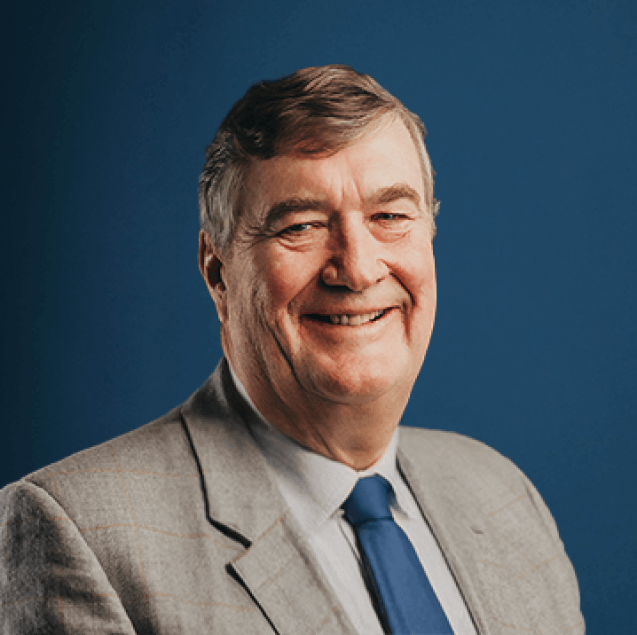
Portrait of Arnaud Dalais in a light checked jacket against a deep navy background
The portrait is shown in full, without cropping.
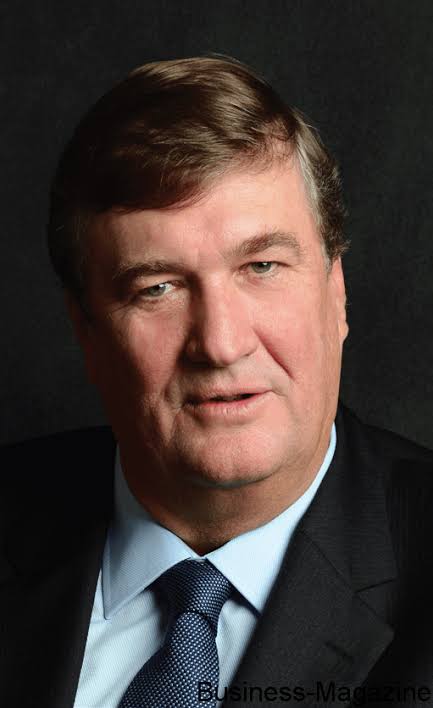
Editorial portrait of Arnaud Dalais against a dark background

iv In closing

The measure of stewardship

The clearest external assessment of this leadership comes from his successor. Jean-Pierre Dalais described it as defined by rigour, integrity and vision, and as a long-standing commitment that had profoundly shaped the Group and its legacy. CIEL’s own announcement credited him with an instrumental role in the Group’s diversification across sectors and its international expansion, exercised through clear strategic vision, structured governance and a commitment to founding values.

These are the words of an organisation about its outgoing chairman, and should be read as such. But the underlying facts are independently verifiable: the dates, the offices, the reported results, the sequence of the handover. On the public record, an institution that entered his tenure as a sugar-rooted Mauritian company left it as a six-cluster group operating across ten markets, with the chair passed on in an orderly, pre-announced transition.

That is what stewardship looks like when it is measured in decades rather than in headlines.